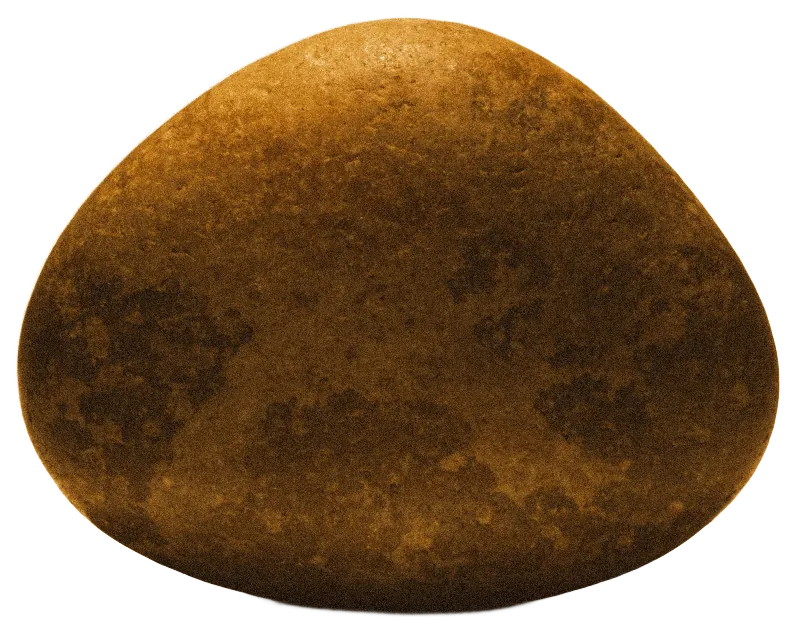
Glory isn't a glow. It's weight.
A stone in the hand — heaviness you can't argue with.
The full Week 1 gathering, as it happened. Watch it here — or walk the week below at your own pace. Same road.
We say the word glory all the time. We almost never mean weight. But the Hebrew kavod is heaviness — the felt, undeniable nearness of God, here, in the room. On the mountain Moses asks the boldest thing a person can ask: show me your glory. God answers not with fire but with goodness and a name.
But do not mistake nearness for safety. The same weight struck Uzzah for steadying the ark (2 Samuel 6:7) and made Sinai a mountain no one could touch and live (Exodus 19:12). It was never safe — which is what makes it staggering that God came close at all. So the question we carry starts now: do we want what God gives — or the weight of God Himself? Weight is not a gift you hold. It is a gift that holds you down — and remakes you.
- When have you felt the "weight" of God — or have you? Say it without church words.
- Be honest: are you hungrier for what God gives, or for God Himself?
- "If your presence won't go, I don't want to go." Where is that hard to mean?
Catch yourself reaching for the gift — and ask instead for the Giver.
- Before you ask God for anything this week, sit one quiet minute and ask for nothing but Him.
- Catch one moment you wanted God's help more than God's face — and name it to Him.
- End the day with a single sentence: where did I feel His weight today?
You don't have to do anything with this space. It's for sitting, not solving.
"Be still, and know that I am God." — Psalm 46:10
Go deeper · optional, never a test
kavod (heaviness) → the Greek doxa → Paul's "eternal weight of glory" (2 Corinthians 4:17) — weight the whole way through. Hold it as a picture, not a proof: kavod can simply mean honor, and meaning is set by use, not by a root — but where the subject is God drawing near, the weight is exactly the point. The danger thread keeps it honest: Sinai (Exodus 19:12), Uzzah (2 Samuel 6:7), Nadab & Abihu (Leviticus 10:2). Nearness was never the same as safety.
Say it: kavod · kah-VODE
The message this week walks came from a full teaching — and these are the notes I taught from: the whole arc, move by move, the research that undergirds the study, and every passage in full.
One quiet thing to start now: write yourself a short letter — the weight you're carrying, the room you've kept shut, what you actually want. Seal it, and don't open it until the final night. We never see it; that's the point.
See the whole road on one page →
Now close this and carry it. The weight does its work in the week — not on a screen.