The Weight
My message notes, opened — the Week 1 teaching laid out by its logic, the research that undergirds the study, and every passage in full.
Week 1 of The Returning Glory · Exodus 33 · NASB 1995
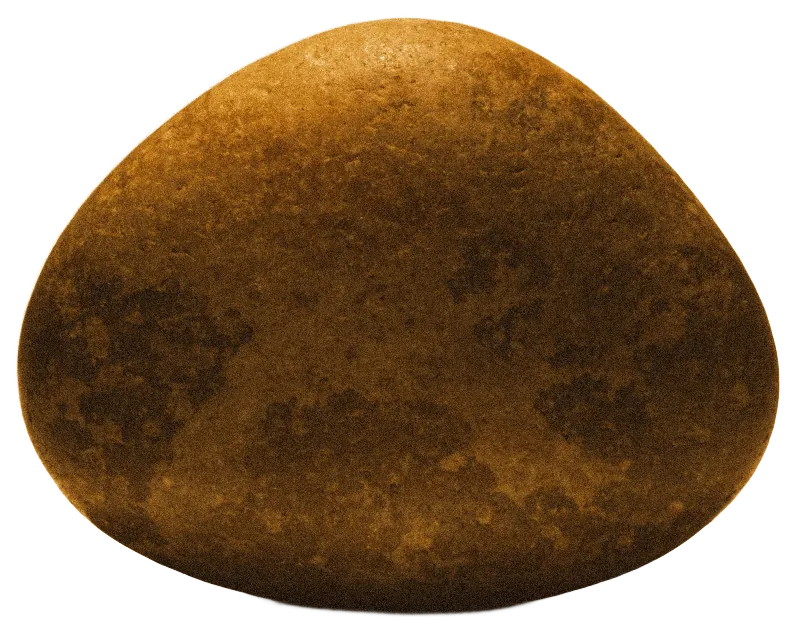
Glory means weight — and the weight is His presence.
Do we want what God gives — or the Giver Himself?
Contents
The Weight
What this page is — My message notes, opened. The Weight is the first teaching of The Returning Glory — the night the whole six-week road got its question. Here it is the way I built it — and the way I taught it, live, at the first gathering of The Returning Glory community group: laid out by its logic, spine and hinges showing, not minute-by-minute the way it ran in the room. Underneath the message you'll find the study I did to earn every line — the Hebrew under the English, the honest fences, the places I refused to over-claim — and at the bottom, every passage the teaching touched, in full, in the order I taught it.
The one sentence — Glory means weight — kavod, the Hebrew under the English. Not the goosebumps, not the room going sweet — a mass, His manifest presence, the thing a room can gain or lose. And once you know that, six weeks hang on one question you can't unhear: do we want what God gives — or the Giver Himself?
Before you start — This page is the teaching behind Week 1 of the journey — sit with the week itself first if you haven't. The message walks one mountain, Exodus 33–34: Moses asks the boldest thing a person can ask — show me Your glory — and what God does with that ask is the whole teaching. Four movements: the weight and the danger · He came close anyway · the cleft is the Rock · the Giver or the gift. Here for the study? Jump straight down to the desk — the words, the threads, the honest debates. Here for the text itself? Every passage is at the bottom, in full.
Watch the gathering
The open — the word we went soft on
Why I opened here — We say glory all the time. When do we ever mean weight? Gold cursive on the slide, a warm filter, a good worship set — and what we mean is the feeling. I'm not mocking that. But before this series could go anywhere, the word had to get its mass back. So I started with the hush when a casket comes down the aisle — gravity you didn't vote on. That's the word. Kavod. Heavy. Think of a stone in your hand. It's not a vibe.
The proof by absence — You want to know the weight is real? Watch what happens when it leaves. A woman went into labor the hour the news hit — the ark taken, her husband dead, her father-in-law gone. And dying in that birth, she spent her last breath on a name. Ichabod. The glory has departed. Not the feeling faded. The weight left the building — and she'd brand it on her son forever before she'd let anybody pretend otherwise. (That name gets its own week — Week 3. It was planted here on purpose.)
Where the open lands — Glory is weight. And the weight is His presence. Moses just heard it — "My presence shall go with you." So here's the question the whole series carries: not what will God give me. Do I want Him? Come up the mountain.
The reading — Exodus 33:12–14
In this house, we don't teach until we've read — The mountain conversation opens with Moses negotiating for one thing — and God granting it before Moses ever asks the bold question.
Catch the ask under the ask — Let me know Your ways that I may know You. Not the route to Canaan. Him. The presence is already promised before verse 18 is ever spoken — which is what makes what Moses asks next so staggering. He has the promise in hand, and he still wants more of the Person.
Movement One — The weight, and the danger
The move — Did you catch what Moses asks for? He's closer to God than any man alive. He could ask for anything. He doesn't ask for another miracle. Or another sign. He asks for… God. And what God says next is the strangest sentence on the mountain — this movement holds it as long as it can stand.
The No you don't put on a flyer
Say it plain — He asked to see God. And God said no. I don't know about you — but that stops me. You don't put that on a flyer. That's not good marketing copy.
Face to face — and "you cannot see My face"
The apparent contradiction — If you're quick, you caught something else. Nine verses back, God spoke with Moses "face to face, just as a man speaks to his friend" (33:11). So which is it — face to face, then you cannot see My face? Two different things. One is friendship: no wall, no go-between. The other is the raw, unshielded weight. He'll talk with you like a friend. He won't hand you the full mass and watch it break you.
The study under that — 33:11's "face to face" is the Hebrew idiom for direct, unmediated speech — friend to friend (compare Deuteronomy 34:10, and Numbers 12:8's "mouth to mouth") — not the unshielded glory of 33:20. No contradiction; two registers of nearness. This is the kind of seam a skeptic will press on, so I did the work before the room could ask.
The weight has teeth
The danger thread — Because it was never safe. Ask Uzzah, who reached out to steady the ark and never drew his hand back (2 Samuel 6). Ask Sinai — fenced, so a touch would kill you (Exodus 19:12). Ask Nadab and Abihu — one strange fire, and gone (Leviticus 10). We've sanded God down into a life coach with better lighting — someone who mostly exists to be nice to us on a schedule. The God on this mountain fences a mountain. You cannot domesticate God. It's the only one worth wanting.
Handle Uzzah honestly — The study behind that hard story: Uzzah's failure was method, not sincerity — the ark rode a cart when the word said poles (2 Samuel 6:3; Numbers 4:15; 1 Chronicles 15:13). David himself names it later: we did not seek Him according to the ordinance. The danger isn't that God is trigger-happy. It's that the weight is real.
Where it lands — Nearness was never the same as safety. And it isn't because He's angry. Holiness is dangerous because God is God. And yet — watch what He does next. He comes closer.
Movement Two — He came close anyway
The move — The no was never a door slammed in his face. It was a hand laid flat on his chest — not yet — and then a Father leaning down to show him something he could survive. Moses asked to see the weight. God answers with… goodness. And a name (33:19). This is the hinge the whole teaching turns on — from dark to light — and in the room I gave it the most time of anything on this page. It reads quick here. It did not go quick.
Remember where they're standing
The context that makes it staggering — Before you soften that name — remember where they're standing. One chapter back, they'd melted their gold into a calf and called it god (Exodus 32). This name isn't spoken over people who earned it. It's spoken over the ones who just betrayed Him.
Slow to anger
The middle phrase — Say it again. Slow to anger. Not slow to love — slow to anger. He rations His wrath. He spends His kindness like He'll never run out. The heaviest thing in the universe turned out to be His kindness. You can brace for a blow. You can stand under somebody's anger. Nobody is built to stand under being loved like that. That's the thing that finally drops you to your knees.
Mercy and justice — in one breath
Don't skip 34:7 — And then — don't skip past this — "He will by no means leave the guilty unpunished" (34:7). Both. In one breath. That's what the weight is made of. A mercy-only God leaves the cross answering a debt the room was never told it owed — and the tension 34:7 creates is exactly what Movement Three resolves.
Where it lands — So the weight of God is His character. Mercy — with mass. He asked for power. God answered with His name.
Movement Three — The cleft is the Rock
The move — This is what the whole mountain was pointing at. God makes a way. "There is a place by Me," He says — stand on the rock. He hides Moses in a cleft, covers the opening with His own hand, and lets him see only the back. No one survives that weight in the open. The only way through is hidden inside Someone else.
Two rocks, one Christ
Don't miss what the cleft is — Rock of Ages, cleft for me. Scripture hands you two rocks, and Christ is both. The cleft that hides Moses here. And the rock struck in the wilderness so the people could drink — "and the rock was Christ" (1 Corinthians 10:4). Two scenes. One Rock. And the guilt God swore He would not wave off — He would not make you carry it either. He carried it Himself. Struck, so we could hide in the wound and carry the glory instead of the sentence. Moses in the cleft. You in Christ — "the glory of God in the face of Christ" (2 Corinthians 4:6).
The honest footnote — The cleft (33:22) and the struck water-rock (Exodus 17:6; 1 Corinthians 10:4) are different scenes. Fusing them is typology — Toplady's "Rock of Ages," not a single-text reading. Legitimate to preach; I don't defend it as the plain sense if pressed. The study underneath holds that line so the pulpit doesn't have to blur it.
Only the back
What Moses actually got — Look what He grants him. Only the back. "You shall see My back, but My face shall not be seen" (33:23). The going-away. The wake, not the face. This side of glory, that's usually all we get — not Him full in front of us, just the sense that He was just here. Don't rush past that. And yet — even the back of God, just the leftovers, left Moses' face burning with light (Exodus 34:29). The shining face isn't the opposite of the weight. It is the weight. Made visible.
The feather and the rock
The weight being formed in you — And that same weight is being prepared for you. "An eternal weight of glory" (2 Corinthians 4:17). Put them on a scale: the affliction is a feather; the glory is a rock. You don't get heavier by gritting your teeth. You get heavier by beholding (2 Corinthians 3:18). You become what you can't look away from — old couples end up with the same face; a boy raised watching his father inherits his walk. So look at Him. And be carried — because He is carrying you.
The fence I will not cross — Your pain is real. I won't stand here and promise you'll always feel it forming you — Paul didn't. He said look at what you can't see (4:18). Job never got his answer, and it was still enough. Don't grip harder. Behold Him. Be carried. The test I hold every version of this movement to: could the most bereaved person in the room say amen? The weight being formed is God Himself — never a promised payout.
Where it lands — You are not being punished by the heavy seasons. And you are not carrying them alone. The weight too heavy for Moses to look at — God is forming you to carry it. Hidden in Christ.
Movement Four — The Giver or the gift
The move — Now back up three verses. Before Moses ever said show me Your glory, he said this (33:15): if Your presence doesn't go with us, don't move us from here. He would rather be in a desert with God than in the promised land without Him. And I'll tell you where I land: I can be in a desert with God and be all right — I'd rather that than the promised land without Him.
The vending machine
Now it's about us — We are experts at wanting what God gives — the open door, the healing, the check that finally clears. And He gives. He's a good Father. But somewhere we started treating the King of glory like a vending machine. Put in the prayer. Pull the lever. And when the thing doesn't drop, we bang on the glass and wonder where He went. We want His hand so badly we never look up at His face.
The part that should scare us — You can get every gift on the list — and still name the whole room Ichabod. Full hands. Empty room.
The charge — one quiet minute
Small on purpose — This week. Once. Before the list of needs — sit one quiet minute and ask Him for nothing but Himself. Not instead of your needs — bring those, He told you to. But before all of it: one minute wanting the Giver more than the gift. And if that want isn't even there — tell Him. Ask Him to give you the hunger. He's the only one who can.
The fence on the charge — "Ask for nothing but Him" is an invitation, never a works lever — even the wanting is His gift. The one who can only manage the desperate ask gets blessed before the turn, not graded.
Where it lands — The question we walk out with — six weeks, starting tonight — isn't what will God give me. Do I want Him?
The close — Come
The close line — The whole road starts here: not "take the weight off me" — "show me Your glory."
The call, leaving no one out — The one who's gone soft — come. The one bracing for a blow — come. The one carrying what nobody can see — come. The one who's wanted His hand and forgotten His face — come. And the one not even sure they want Him yet — come, and ask Him to make you want Him.
The benediction carried four people out — the one still bracing for a blow (let them feel how heavy Your kindness is) · the one who only knows how to ask for things (give them a hunger for Your face they didn't walk in with) · the one carrying weight that's made no glory they can see (let them look at what is unseen, and feel underneath them the arms that never let go). And the one not sure they even want Him yet — we don't pronounce them; we ask Him to draw them.
The refrains. Glory is weight. · The weight is His presence. · You can get the gift and lose the Giver. · Come.
From here down, it's the desk. The message is above. What follows is the study I undertook to build it — the words, the fences, the honest debates, and every passage in the order I taught it. Nothing below is required to receive the word; it's here for anyone who wants to see the beams behind the wall.
The study underneath
What this is — Before I taught a word of this, I went down into the text — the Hebrew under the English, the cross-references, the places where honest readers disagree. Every Scripture quote in this teaching is the NASB 1995, checked word for word before it was ever spoken — nothing typed from memory. This section is the desk work, laid out plainly.
The words under the words
Kavod (Hebrew: כָּבוֹד) — "glory," rooted in heaviness, weight. The working definition of the whole series: God's weighty, manifest presence — what a room can gain or lose. Honesty about the root: kavod can simply mean honor, and meaning is set by use, not etymology — so I hold "glory is weight" as a picture that holds, not a lexical proof. Where the subject is God drawing near, the weight is exactly the point. (Exodus 33:18; 1 Samuel 4:21)
Baros doxēs (Greek: βάρος δόξης) — "weight of glory," 2 Corinthians 4:17. Two words: doxa renders kavod in the Greek Old Testament; baros — weight — is Paul's added word. The apostle heard the heaviness in the Hebrew and said it out loud in Greek. The picture has apostolic backing — and it stays a picture, not a proof.
Panim el panim (face to face) — 33:11's "face to face" is the idiom for direct, unmediated speech — friend to friend (Deuteronomy 34:10; Numbers 12:8, "mouth to mouth") — not the unshielded glory of 33:20. Friendship and full sight are two different gifts; Moses had one and asked for the other.
The threads the teaching runs on
1 — The ask (the spine). Exodus 33:12–14 (the presence promised) → 33:15–16 (the desert-over-Canaan bargain) → 33:18 (show me Your glory) → 33:19–23 (goodness, the Name, the cleft, the back) → 34:5–7 (the Name spoken) → 34:29 (the borrowed shine).
2 — The danger thread. Uzzah (2 Samuel 6, with the method texts: 6:3; Numbers 4:15; 1 Chronicles 15:13) · Sinai fenced (Exodus 19:12) · Nadab and Abihu (Leviticus 10) · Isaiah undone (Isaiah 6:1–5) · the priests who couldn't stand (1 Kings 8:10–11) · Ichabod (1 Samuel 4:21–22). Nearness was never safety — which is what makes the coming-close staggering.
3 — To Christ. The cleft (33:22) → the struck rock (Exodus 17:6; 1 Corinthians 10:4) → the glory in a face (2 Corinthians 4:6) → the weight being formed (4:17) by beholding (3:18). The mountain's shielding becomes the gospel's hiding place.
4 — The series thread. Ichabod planted in the open pays off in Week 3; "the weight is His presence" becomes Week 2's dwell, not visit — the whole road is this one question walked forward.
The honest fences and debates
Go deeper · kavod and the root
On "kavod means weight." The root points at heaviness, and Paul's baros doxēs hears it — but kavod in usage often means honor. I preach the weight as a picture the canon keeps painting (Sinai, the temple dedication, the departing glory), not as a dictionary proof. Meaning is set by use.
Go deeper · the two rocks, one Christ
On the two rocks. The cleft of Exodus 33 and the struck rock of Exodus 17 are different scenes. Reading Christ as both is typology with a long pedigree (Toplady's "Rock of Ages, cleft for me"), and 1 Corinthians 10:4 licenses the second explicitly. I preach the fusion as devotion, and I don't defend it as the plain sense of Exodus 33 if pressed.
Go deeper · Uzzah — method, not sincerity
On Uzzah. Method, not sincerity: the ark rode a cart when the word said poles (2 Samuel 6:3; Numbers 4:15), and David names the failure himself in 1 Chronicles 15:13. The story guards reverence; it does not paint a capricious God.
Go deeper · mercy and justice in one breath
On mercy and justice. Exodus 34:6–7 holds compassion and "by no means leave the guilty unpunished" in one breath. Drop the second half and you get a mercy-only God whose cross answers no debt; drop the first and you get a judge with no Name. The teaching keeps both spoken — and lets the cross of Movement Three carry the guilt God would not wave off. And I'll be honest about the craft: a late pass on this teaching quietly dropped the justice half of the Name, and a final re-check caught it — the whole Name went back into the spoken text.
Go deeper · presence, not payout
On "the weight being formed in you." Presence, not outcome. The glory formed is God Himself — derived, reflected (Moses' borrowed shine, Exodus 34:29) — never a promised payout, never "your comeback guaranteed." The test every version of Movement Three had to pass: could the most bereaved person in the room say amen?
Go deeper · why Week 1 holds back repentance
On Week-1 restraint. The ask stays re-oriented desire — "do I want Him?" — with explicit repentance language deliberately reserved for later weeks in the series. The restored justice of the Name plus the conviction of Movement Four carry the weight until then.
Every passage, in order
Why this index exists — Scripture moves fast when it's taught. This index slows it back down: the passages the teaching stood on, quoted exactly as they were read — NASB 1995 — in the order the teaching walked through them. Read it with your own Bible open beside you; the references around each quote give the fuller settings.
The reading
Movement One — The weight, and the danger
Movement Two — He came close anyway
Movement Three — The cleft is the Rock
Movement Four — The Giver or the gift
Every reference — read the whole thing
Everything this page cites — quoted or referenced — gathered in one place. Each link opens the full passage, NASB 1995.
How I handled Scripture — my commitments to you
The translation — Every quote is the New American Standard Bible (NASB 1995), the translation I taught from, fetched and cross-verified word for word before the teaching — never typed from memory. Partial quotes show their ellipses; nothing is clipped to make a point the full text wouldn't make.
Pictures stay pictures — Where the teaching leans on a picture (glory as weight, two rocks as one Christ), the desk above says so plainly, and I don't preach a picture as a proof.
The whole Name — I don't quote Exodus 34:6 without 34:7. Mercy and justice arrive in one breath, and the cross is where the breath resolves.
Keep walking — Week 2 is where the question turns into an address: God has wanted to live with us since a garden.
Week 2 notes — Make Me a Place →My message notes, from The Returning Glory. Scripture quotations NASB® 1995, © The Lockman Foundation. Used by permission.