Make Me a Place
My message notes, opened — the Week 2 teaching laid out by its logic, the research that undergirds the study, and every passage in full.
Week 2 of The Returning Glory · Exodus 25:8 · NASB 1995
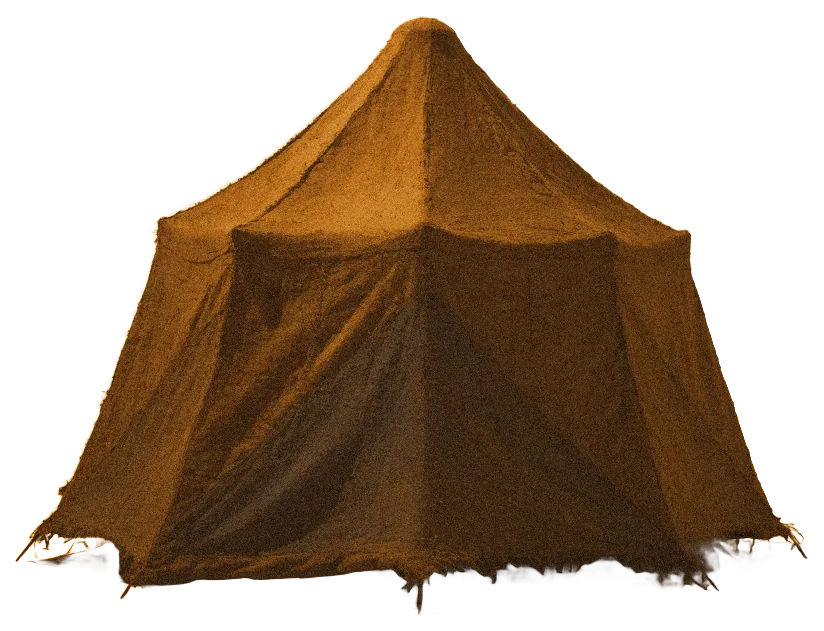
God has wanted to live with us since a garden. He said dwell — not visit.
What room have you kept closed?
Contents
Make Me a Place
What this page is — My message notes, opened. Make Me a Place is the second teaching of The Returning Glory — the night the series traded a question for an address. Here it is the way I built it — and the way I taught it, live, at the second gathering of The Returning Glory community group: the redemptive arc laid out by its logic (garden → tent → Christ → you), the study underneath every claim, and at the bottom, every passage the teaching touched, in the order I taught it.
The one sentence — God has wanted to live with us since a garden — and when we lost the walk, He did not file it away. He engineered His way back in: a tent, then a body, then you. The tabernacle is where the homecoming gets blueprints — "let them construct a sanctuary for Me, that I may dwell among them." So Week Two's question is quiet and hard: what room have you kept closed?
Before you start — This page is the teaching behind Week 2 of the journey. It walks one long road in four movements: it began in a garden · dwell, not visit · the true tent · open the closed room. I studied the theological spine out in my library (Eden as temple, the mishkan) before I wrote a word — the desk below shows the beams. Here for the text itself? Every passage is at the bottom, in full.
Watch the gathering
The open — the walking
Why I opened here — Before there was a tabernacle, there was a garden. And the garden was never mainly about the fruit or the trees — it was about the walking. Our proximity to God. After the fall, Adam and Eve hear God walking — not like a visitor passing by to check in, but like a father walking around the home he built for His family, searching for children who have hidden from Him because they know they've done wrong. Sit in that picture, because it's the oldest picture of God in the whole Book. Not enthroned at a safe distance. On foot. In the yard. At evening. Looking for us.
The real tragedy — What follows their unapproved snack time is shame, mistrust, and fear — so they hide in the trees. The real tragedy of Genesis 3 isn't mainly that we lost a garden. It's that we lost the walk.
Where the open lands — So when God says at Sinai — "Let them construct a sanctuary for Me, that I may dwell among them" (Exodus 25:8) — hear it right. That is not a new idea. That is God trying to move back in. He has wanted to live with us since a garden — and if there is a room in you that has been shut a long time, He has wanted into that one too. You know the door I'm talking about. Now watch how far He will go to do it.
The reading — Genesis 3:8
The oldest scene — You just heard this scene in the open — now read it slowly, in its own words. (Exodus 25:8 is the cover of the whole message; it's quoted in full at Movement Two.)
Catch the direction — He walks toward. They hide from. Every movement of this teaching is that one verse, reversed one step at a time.
Movement One — It began in a garden
The move — When we picture the garden from a modern perspective, we see a lush park with beautiful trees — and we miss what the rest of the Bible sees when it looks back at Eden. This movement reads the garden the way the later books teach us to read it — and then watches what God does at the gate when we lose it.
The first priest, the first holy place
Read it like the rest of the Bible does — Adam is put in Eden "to cultivate it and keep it" (Genesis 2:15) — two Hebrew words, abad and shamar, serve and guard — the exact pair used later of the Levites who serve and keep the tabernacle (Numbers 3:7–8) and of the priests themselves (18:7). A river running out. Gold in the ground. A tree in the center. Adam wasn't a landscaper. He is the first priest, and Eden is the first holy place.
A guarded door is still a door
Think like a builder — After they explain their sin, God pronounces the consequences, clothes them to cover their shame, and drives them out — stationing cherubim at the east of the garden to guard the way back to the tree of life. Don't rush past that. The way home is not erased. It is guarded — and notice the compass: east. Keep that bearing; every door in this story faces the same way. If you want somebody out forever, you don't post a guard — you take the door off the hinges and you brick up the wall. God didn't brick anything up. He posted guards. And a guarded door is still a door.
Even the exile is fathered — We read Genesis 3 like God slammed the gate and walked off disgusted. Look closer. He clothed our shame in "garments of skin" (Genesis 3:21) and He guarded the way back instead of paving over it, as if He were already planning humanity's return to His presence. And the detail that pays off two movements from now: those same cherubim get woven into the veil of the tabernacle (Exodus 26:31) and hammered in gold over the ark (25:18–20).
Where it lands — Everything after Genesis 3 is one long homecoming. We were made to be walked with, and we lost the walk — and God has been engineering His way back into the yard ever since. Sinai is the next major move.
Movement Two — Dwell, not visit
The move — Two words sit inside one request — and together they are the most surprising sentence at Sinai: the most holy God in the universe asking to move into the neighborhood.
Two words: miqdash and mishkan
Hold both — Miqdash — sanctuary, holy place, the God who is high and set apart. And mishkan — a dwelling, from the verb shakan: to settle in and stay. Holiness and nearness in a single breath. The holiness is why the veil will have to be torn — hold that; Movement Three pays it.
Not a weekend stay — God is not booking a weekend stay in your life. He's not doing drop-ins — a visit when the worship is sweet, gone by the time you're back in traffic. He is asking for an address.
The order is the gospel in miniature
Read it backward — God says in Exodus 29 that He "brought them out of the land of Egypt, that I might dwell among them" (29:45–46). The reason He brought them out was so He could move in. Presence was the point of the rescue, not the reward for good behavior. And He didn't wait for them to be in an ideal place before He moved in. He knew they still had a ways to go — and He still came to dwell with them and change them from inside their situation.
The triage tent — A lot of us are trying to earn His presence — clean enough, disciplined enough, put-together enough, and then we'll feel comfortable inviting Him in. Exodus flips it. If you wait until the house is ready, He never comes; the whole point is that He comes to one that isn't. Picture a field hospital. Nobody waits for the battlefield to calm down before they put up the medical tent — it goes up in the mud, in the blood, because that's where the dying are. Wait for it to be safe, and everybody dies. Sinai is God setting up a triage tent in the middle of the camp.
The fence on that — Don't hear it as "so it doesn't matter." The same God who says "I will make My dwelling among you… I will also walk among you" says it inside a covenant (Leviticus 26:11–12), and He told Moses, "I will not go up in your midst… and I might destroy you on the way" (Exodus 33:3). He moves in first — and He does not move in neutral. He comes to change the house He's living in. That's not the price of admission; it's what happens after you're let in.
A portable Eden
Look at the furniture — A lampstand with branches like a tree. Gold everywhere. Cherubim woven on the veil. An entrance facing east — again. And a priest instructed to do exactly what Adam did: serve and guard. The tabernacle is a portable Eden — the garden folded up and set on poles so the presence could travel with a wandering people.
Where it lands — The tabernacle is Eden, mobile — the first sanctuary made to travel, so He could get back to the walk. But it was never the best tent.
Movement Three — The true tent
The move — Every tent was a shadow of a truer dwelling — and a shadow means something real is casting it. The tent held a glory almost nobody got to see. One man. One room. One day a year. Then John reaches back and picks up the tent's own word.
The Word tabernacled
The tent's own word — The Greek is eskēnōsen: literally tabernacled, pitched His tent, among us. The same glory that filled the tent so heavily that Moses "was not able to enter" (Exodus 40:34–35) was made flesh in Jesus Christ.
How did anybody survive Jesus?
The Week-1 contradiction, resolved — Last week, God told Moses he would not survive it if He showed him His glory. So how did anybody survive Jesus? Because the glory came wrapped. Hebrews tells us what the flesh was: the veil (10:20). Moses got the back because there was nothing between them; we got the face because God put a curtain on so we could look and live — "the glory of God in the face of Christ" (2 Corinthians 4:6). The veil didn't just get torn. It got worn first. God didn't send a better tent. He became one.
The guarded gate finally opens — Remember the cherubim woven into the veil, guarding the way in — the same guards as Eden's east gate. That veil hung there because He is miqdash — holy, set apart. Holiness is why the veil was there — which is why it could never just be pulled aside. It had to be torn, and tearing it cost a body. His holiness wasn't removed that day. It was satisfied. On the day Jesus died, "the veil of the temple was torn in two from top to bottom" (Matthew 27:51). Torn from the top — that's God's hand, not ours. And Hebrews names what the torn veil was: "a new and living way… through the veil, that is, His flesh" (Hebrews 10:19–20). The barrier to God, once guarded by cherubim, was torn open from within — and the way back to the tree of life runs straight through a man on a tree.
And now — us together, and you
Where it's headed — He didn't stop at pitching His tent next to us. Paul says it two ways: to a whole church — "you are a temple of God" (1 Corinthians 3:16, said to all of them together) — and to each body — "your body is a temple of the Holy Spirit" (1 Corinthians 6:19). Garden, then tent, then Christ — and now us together, and you. If you belong to Him, the presence has already taken up residence. The dwelling didn't just come near. It moved in — but it's not going to finish there.
Where it lands — Eden was the first dwelling. The tent was Eden made portable. Christ is the dwelling made flesh. And you are where it comes to rest. The whole Bible is God working His way back into the room.
Movement Four — Open the closed room
The move — So the veil is torn, the guarded door stands open, and the presence has already moved in. God's project from Eden to Sinai to Bethlehem to the last page is to dwell — so the spiritual life isn't mainly you climbing up to Him. It's us opening up to Him.
That house is you
The one door — You finally get the house — every cabinet, every closet, you know which floorboard creaks. But down past the laundry there's one door you never open. We furnish the rest, we hang the pictures — and we live around it. And at night, when the house goes quiet, you know exactly where it is. That house is you. The oldest question in the Bible isn't "how do I reach God?" It's the one God asked in the garden: "Where are you?" Are you hiding in shame? In insecurity? In fear? Or being manipulated by the enemy into thinking the word God gave you will not come to pass? What room have you kept locked away from God?
Not the living room you keep vacuumed
The whole house — Don't just ask Him to visit. Don't just give Him a few hours on Sunday, the obligatory quick prayer you send up before you eat, the cross you wear on your chest over a heart that has gone cold toward Him. God is asking for a sanctuary He can dwell in — the whole house, including the room you'd rather He skip. Not the living room you keep vacuumed for company — that room is a performance. He wants the one you lock before the company comes. The habit you won't acknowledge. The relationship you ghosted. The grief you keep in the dark because you don't want Him standing in it. That is where God wants to come — not to condemn what's in it, but to dwell in it and transform you.
The charge — crack the door
Small on purpose — This week, name one closed room — out loud, once — and crack the door. A confession. A hard text you've been avoiding. One honest sentence in the dark. You don't have to clean it before He comes. You just have to let Him in. And if all you can do is crack it an inch — crack it an inch. He's not standing at the door grading the width. An inch is a yes, and He can work with a yes.
Where it lands — He has wanted to live with you since a garden. Week Two only puts the oldest question back on the table — where are you? — and asks whether, this week, you'll open the door instead of hiding in the trees.
The close — Make room
The close line — The tabernacle was not God's second choice after He lost the garden. It was the garden — coming after us.
The roll-call, leaving no one out — The one keeping God in a guest room — give Him the house. The one with a locked room — you don't have to clean it; just unlock it. The one trying to earn the address — the rescue already happened; He's asking to move in, not to be impressed. The one who lost a walk so long ago they stopped hoping for it — He never stopped walking toward you; that's the whole story.
The appeal — Make room. You don't furnish it first, you don't fix it first — you open it. And the God who walked in a garden, pitched a tent, and tore the veil is not going to stand politely outside a cracked door. He fills what you open — He fills the room with Himself, not a promise to finish it by Friday; some rooms He sits in a long while before they change, but He does not leave.
The refrains. God has wanted to live with us since a garden. · He said dwell, not visit. · Make room.
From here down, it's the desk. The message is above. What follows is the study I undertook to build it — the words, the fences, the honest debates, and every passage in the order I taught it. Nothing below is required to receive the word; it's here for anyone who wants to see the beams behind the wall.
The study underneath
What this is — I studied the theological spine of this teaching — Eden as temple, the mishkan — out in my library (Logos-anchored word and theme studies) before I wrote the teaching; the verse wording is the NASB 1995, checked against the text for this message. This section lays that desk work out plainly: the words, the threads, and the honest fences.
The words under the words
Mishkan (Hebrew: מִשְׁכָּן) — "dwelling," from shakan, "to settle, to tent." The noun is in Exodus 25:9; the verb — "that I may dwell" — is in 25:8. God's ask is residence, not visitation. (Exodus 25:8–9)
Miqdash (Hebrew: מִקְדָּשׁ) — "sanctuary, holy place," the other noun in Exodus 25:8. The set-apartness that makes the nearness staggering — and the reason the veil had to be torn, not pulled aside. Holiness satisfied, not removed.
Abad + shamar (Hebrew: עָבַד / שָׁמַר) — Genesis 2:15's "cultivate/serve" + "keep/guard" — the priest-in-the-sanctuary pair (Levites: Numbers 3:7–8; priests: 18:7). The textual hinge of Adam-as-first-priest.
Eskēnōsen (Greek: ἐσκήνωσεν) — John 1:14, "dwelt / tabernacled," from skēnē, "tent." John reaches for the tabernacle's own vocabulary on purpose: the Word pitched His tent among us. (John 1:14)
The threads the teaching runs on
1 — The dwelling chain (the spine). Garden (Genesis 2–3) → tent (Exodus 25–40) → Christ (John 1:14) → you and the church (1 Corinthians 6:19; 3:16) — until the tabernacle of God is with men (Revelation 21:3). Four dwellings, deliberately — the chain drops the standalone Solomonic temple to keep the line clean.
2 — The east thread. Eden's guarded gate is at the east (Genesis 3:24); the tabernacle's entrance faces east; and the compass keeps paying forward — the glory departs and returns by the east in Week 3. One bearing, the whole series.
3 — The cherubim thread. Guards at Eden's gate (Genesis 3:24) → woven into the veil (Exodus 26:31) → hammered gold over the ark (25:18–20) → the veil torn from top to bottom (Matthew 27:51), named by Hebrews as His flesh (10:19–20). The guarded door opened from within.
4 — The order thread. Rescue, then residence (Exodus 29:45–46) — presence as the point of the exodus, not the reward for behavior — fenced by Leviticus 26:11–12 and Exodus 33:3: He moves in first, and He does not move in neutral.
The honest fences and debates
Go deeper · Eden as temple — picture, not proof
On Eden as temple. The symbolism is broad scholarly consensus (Wenham, Beale) — but Genesis never uses the word "temple." I hold it exactly like Week 1 held kavod: a picture that holds, not a proof to press. The load-bearing claim is theological, not etymological: the garden is where God and people dwelt, and that dwelling is what was lost.
Go deeper · the furniture — where teachers overreach
On the furniture. Hebrews authorizes the big copy/shadow move (8:5); turning every loop and color into a private Christ-symbol is where teachers overreach. I keep the weight on the two words — miqdash / mishkan — and the order — rescue, then residence.
Go deeper · "you are a temple" — the church, and you
On "you are a temple." 1 Corinthians 3:16 is corporate — the church together is God's temple (don't divide it, 3:16–17); the individual body-temple is 1 Corinthians 6:19. The personal "the presence moved in" stands on 6:19; 3:16 widens "make room" into what the church does together.
Go deeper · the torn veil is the NT's own reading
On the torn veil. The veil-as-His-flesh reading is not just clever typology — Hebrews 10:19–20 is the New Testament's own words: "a new and living way… through the veil, that is, His flesh." The cherubim link (Exodus 26:31 → Matthew 27:51) is grounded text on both ends. The point isn't a puzzle solved — it's a barrier removed.
Go deeper · presence, not repair
On "He fills what you open." Presence, not repair. The promise is the Indweller, not a resolved room on your timeline — Hebrews 11:13, 39: they died still waiting on the promise, and were commended. The test: could the one whose room is still dark months from now still say amen?
Go deeper · what Genesis 3 does — and doesn't — curse
On Genesis 3's judgment. Precision matters: God curses the serpent (3:14) and the ground (3:17) — never Adam and Eve. He pronounces consequences, clothes their shame, and guards the way back. The exile is real, and it is fathered.
Every passage, in order
Why this index exists — The passages the teaching stood on, quoted exactly as they were read — NASB 1995 — in the order the teaching walked through them. Read it with your own Bible open beside you.
The reading
Movement One — It began in a garden
Movement Two — Dwell, not visit
Movement Three — The true tent
Movement Four — Open the closed room
Every reference — read the whole thing
Everything this page cites — quoted or referenced — gathered in one place. Each link opens the full passage, NASB 1995.
How I handled Scripture — my commitments to you
The translation — Every quote is the New American Standard Bible (NASB 1995), fetched and cross-verified word for word before the teaching — never typed from memory. Partial quotes show their ellipses; nothing is clipped to make a point the full text wouldn't make.
Pictures stay pictures — Eden-as-temple is preached as the pattern the rest of the Bible teaches us to see, with its scholarly grounding named — and its limits named too.
Presence, not repair — "He fills what you open" promises the Indweller — never a fixed room by Friday. The teaching blesses the one who can only crack the door an inch.
Keep walking — Week 3 is the honest week: the glory can lift. But watch where He goes when He goes.
Week 3 notes — Ichabod →My message notes, from The Returning Glory. Scripture quotations NASB® 1995, © The Lockman Foundation. Used by permission.