And Dwelt Among Us
My message notes, opened — the Week 4 teaching laid out by its logic, the research that undergirds the study, and every passage in full.
Week 4 of The Returning Glory · John 1:14–16 · NASB 1995
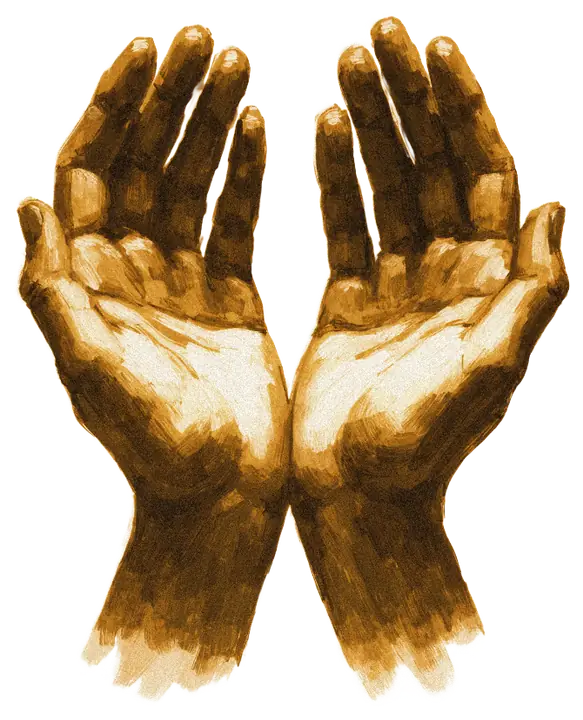
The glory came back — in a Person. And He came full, not in samples.
If He already gave you grace upon grace — what are you still trying to earn?
Contents
And Dwelt Among Us
Week Four is the turn. Three weeks asked where the glory is — what it weighs, where it wants to live, what it costs a house to lose it. This week answers with a Person, and then does something the first three never did: it takes the question off you. Not how do I get near God — but what am I still trying to pay for?
The design law of the night was simple: name the pressure a real person walks in with, find the answer in the text, hand it to them immediately, and give them one thing to do with it. The road runs in four words — supply, received, sealed, behold — and one question keeps coming back: what are you still trying to earn?
These are my message notes — the architecture of the teaching, move by move, with the study underneath every text. The room is where it actually happened.
Watch the gathering
The open — different roads, one word
Nobody arrived the same way — Some came grateful. Some tired. Some carrying a week they would rather not explain. Some are not sure yet what they believe. We did not arrive with one testimony. And we do not all think about nearness to God the same way: for some, a good week means we come close, and a bad week means we stand back. We show up with extra, as though effort could settle the distance. That is not everybody's story — but it is somebody's, and John does not ask the room to share one testimony.
He puts one word in front of all of us — Received.
The question the first three weeks left — Week One: glory is weight. Week Two: the weight wants an address. Week Three: the address can end up empty. Which raises the thing some of us were afraid to ask out loud — if the glory can leave, what keeps me from losing Him?
Where the open lands — John answers with four words most of us read past: full of grace and truth. Not an installment. Not a partial presence. John looks at Jesus and refuses every partial word — he writes full. And if God has already given you grace upon grace out of that fullness, then the night's question is not whether He is near. It is: what are you still trying to earn?
The reading — John 1:9–14
The tent word is here — dwelt — and we opened that in Week Two. Tonight the weight is on the last four words.
Why verse 12 stays in the read — "as many as received Him" is the word the whole night turns on, and it needs to reach the room before Movement Three cashes the identity claim. Receiving is not a reward for consistency. It is how anyone enters at all.
Movement One — Supply: stop living from samples
The pressure — "I only ever get God in small doses." John told us where the glory made its home. Now Paul tells us how much of God came in Christ.
All means all
Every word carries weight — All the fullness — not a portion. Deity — older Bibles say Godhead; underneath both is what God is. Dwells — present tense, the word for where somebody lives. In bodily form — not a man hosting God. The eternal Word became flesh: truly God and truly human, someone who could be seen and touched. Not visited. Not borrowed. Dwells.
The audience matters — This is said to people who treated Christ as one rung on a ladder — a go-between, one manifestation among others. In a single sentence Paul dismantles it.
The sample aisle
On the ground — You know the little paper cup under the grocery-store lights. One bite, and it is empty before you clear the table. The taste wakes your appetite, but it cannot carry you home — a sample was never designed to feed you. Some of us try to live on remembered tastes: one Sunday that carried us, one prayer where God felt near, one moment we keep revisiting because it is the last place we remember feeling full.
The turn — Paul is not describing a taste of God in Christ. Jesus is not the cup on the tray.
A residence does not end
Behind a curtain, on a schedule — The tent was real glory — but glory behind a curtain, on a schedule, that you could not access at will. A cloud lifts. A visit ends. A residence does not.
Where the movement lands — So how much of God came in Christ? Not a delegation. Not a dose. Not a man carrying a measure of God. He is the supply. And if He is the supply — what are you still trying to earn?
Movement Two — Received: put the list down
The pressure — "I have to repay God after a bad week." Some of us believe Jesus is the supply and still live like God keeps a counter open. John does not stop at verse fourteen.
You have received
Read the tense — John does not write we watched His fullness. He writes we have all received. Not will receive when you become consistent. Not may receive after you repair last week. Received. We do not receive His divine essence — we receive from the One who is full.
The pen moment — Write verse sixteen out in your own hand and look at what your own handwriting says about you. Highlight the word received. And be precise about John's we: verse twelve already said as many as received Him. Not your family's faith. Not your attendance. You receive Christ by faith — and you arrive at that counter with empty hands.
The unfinished altar
Not bad — unfinished — The old altar was God's gift. Real grace ran under that blood for centuries. The problem was never that it was bad. The problem was that it was never finished.
He sat down
Read the posture — Every priest stands. Daily. Time after time. If you know the tabernacle's furniture, there is nowhere for a priest to sit — because the work was never done enough to sit. Then Christ offered one sacrifice for all time and sat down. Nothing remained to pay.
Unaffordable grace — Into that economy an older invitation arrives like a rumour from another country: "you who have no money come, buy and eat." That sounds like nonsense until you hear it — there was always a grace no sacrifice could afford. If you could make the payment, it would not be grace. It would be a purchase.
The back-payment math — We know this practically. It is the version of us that shows back up after a bad week with extra — extra serving, extra apologising, extra prayer, extra church — not as thanksgiving but as back-payment. Praying twice as long on Thursday because of what you did on Tuesday. And every time we run that math we are quietly reporting that He sat down too early.
Where the movement lands — The hands were empty on purpose, because empty hands are the only hands that can receive. He sat down. Put the list down. What are you still trying to earn?
Movement Three — Sealed: your worst week did not make Him leave
The pressure — "My failure made God leave." The fear underneath all that earning is not really that you failed. You felt Him on Sunday. You stumbled on Tuesday. Maybe by Thursday the Bible is still closed on the table — not because you stopped wanting God, but because shame has already told you the house is empty again.
First, the old fear
Week Three's pattern, recalled once — Sin is an eviction. It emptied a garden. It walked the glory out of a sanctuary. God is not squeamish — He is holy. And then the One in whom all the fullness of Deity dwells entered a world marked for eviction, on purpose.
He bore our exclusion
The only mouth that never earned the cry — On Friday, at noon, darkness covered the land, and the one voice that never deserved that sentence said it. Every eviction before this fell on the guilty house. At the cross, He bore our judgment and exclusion.
Two fences, held out loud — Not because sin overpowered Him — He is quoting Psalm 22, and that psalm does not end forsaken, it ends vindicated. And the Trinity did not fracture on that hill; God was not less God at three o'clock. In unbroken triune purpose the sinless Son willingly took our place, so that everyone who receives Him may draw near. The cross is where the Bible's eviction pattern finds its answer — not because Ezekiel secretly predicted this scene, but because the New Testament shows us what Christ accomplished through His body and His blood.
Torn from God's side
The tear starts at the top — Not from the floor up. From God's side down.
The veil and the flesh, one image — Hebrews places them together: through the body He offered, He opened the new and living way. The curtain kept you at arm's length; this veil had a heartbeat. The veil did not just get torn. It got worn first.
The seal outlives Tuesday
So who are you now? — Do not answer with how the week felt. Answer with what God said. John already gave the word: right — conferred, not accumulated.
Hold both halves — Your Tuesday matters, because the One who sealed you can be grieved. And your Tuesday does not rewrite the seal: it reads for the day of redemption, not until your next bad day. Seriousness and security in one sentence. Grace and truth.
What security is for — Security does not make repentance unnecessary. It makes repentance possible without terror. If you lied, open the thread and tell the truth without editing it. If you took, return it. If you wounded someone, make the call and begin repair wherever repair is possible. You do not do that to purchase your way back to God. You do it because grace has made you secure enough to stop hiding from what you did.
Where the movement lands — Not an applicant. Not a tenant on probation. A child. Sealed. Invited to draw near. You're a recipient. So what are you still trying to earn?
Movement Four — Behold: what to do when you cannot feel Him
The pressure — "I cannot feel God." If the fullness came, if I received, if I am sealed — why do I not feel it? Sometimes the prayer ends and the room is still quiet. The scan still says what it said. The child still has not called. Your body still hurts. Paul does not tell you to manufacture a feeling. He gives you a direction.
Your verb, His verb
It starts with turning — Not performing. Not qualifying. Turning.
The freedom is in the verbs — Beholding is your verb. Being transformed is done to you — that is the Spirit's verb. Seven words to write under the verse: Beholding is my part. Becoming is His. I turn toward Christ; the Spirit changes me; I walk where He leads. We keep trying to run His verb — white-knuckling the becoming, sanding our own edges, managing our own glow — then skipping the beholding and wondering why the becoming never comes.
One scene. One Gospel. One quiet minute.
The practice — Once a day this week. Choose Matthew, Mark, Luke or John. Read one scene about Jesus — not a chapter, not a study, no notes, no requests. Watch Him. Watch what He does with His hands. Watch who He looks at, and how long. Watch what He says to the person everybody else was done with. Then close the page, put both feet on the floor, and let what you just saw remain in front of you for sixty seconds.
Turn before the feeling — Do not wait for a feeling before you turn. Turn in faith, and trust the Spirit to transform you whether or not the feeling comes.
The guardrail
Receiving is not permission — The One you behold is full of grace and truth; receiving is not permission — it is a residence, and He renovates what He lives in. And beholding is not doing nothing. It is turning toward the One whose Spirit changes what you could never renovate by yourself.
Glory given, not displayed
The withheld verse — Why would God give His Son so you could experience His glory? Listen to what Jesus prayed over you the night before the cross.
Not a private experience — The glory is given, not displayed at a distance — and given to make us one, which the next verse turns into a witness to the world. This was never a rescue with a cold hand-off at the end.
Where the movement lands — So stop climbing. Turn. Look. Beholding is my part; becoming is His — and because His Spirit is changing me, I walk where He leads. What are you still trying to earn? Nothing. You're a recipient.
The close — from applicant to recipient
The road back, in four answers — How much came? All the fullness, bodily. What did the fullness do? We have all received. What did it cost? He bore our judgment and exclusion, and the veil opened. Who are you now? A child. Sealed. Invited to draw near. What do you do when you cannot feel Him? Turn. Behold.
The roll call
The one still earning — He sat down. You can put the list down.
The one doing back-payment math after a bad week — The seal reads for the day of redemption, not until Friday.
The one who has not looked at Him in longer than you would say out loud — One scene tonight, before you sleep.
The one who feels nothing and thinks the nothing disqualifies you — Feelings are fruit, not the receipt. If the feeling tarries, the seal does not.
The one grieving — Lost a person, a job, a place. Your loss is not your Ichabod. He is nearer to the broken than to the impressive — you do not have to put an asterisk on your grief.
Outside the gate
And the one certain you finally did the thing that put you too far outside — there is one more verse.
The same side of the wall — Outside the gate is where everything expelled went. The One in whom all the fullness dwells died at the place of exclusion. That is how far out He went so you could come in. And the verse does not leave recipients comfortable inside — it tells us to go out to Him and bear His reproach. Grace brings you near, then gives you courage to identify with Christ when following Him costs you something.
Where the night lands — There is nothing left to pay at the counter. Open the Gospel. Behold Him. Walk where He leads.
The study underneath
Why full is the load-bearing word — John 1:14 ends on full of grace and truth, and 1:16 immediately cashes it: of His fullness we have all received. The sermon rests on the pair, not on either alone — fullness is not merely a description of Christ, it is the supply the reader is said to have already drawn from.
What the fullness claim does and does not say — Colossians 2:9 says all the fullness of Deity dwells in Him bodily. Believers receive from that fullness (John 1:16); they do not receive the divine essence itself as a possession. The distinction is preached out loud so the comfort never tips into something Scripture does not claim.
Finished, never bad — Hebrews 10 is preached as finished vs. unfinished, deliberately not bad vs. good. The sacrificial system was God-given and gracious; real grace ran under it. What it could not do was finish. The standing priest and the seated Christ carry the argument without disparaging what God Himself instituted.
The cross and the eviction pattern — Ezekiel 8:6 is recalled as the pattern — sin evicts — and Matthew 27 as its answer. The claim preached is that the New Testament shows what Christ accomplished, not that Ezekiel encoded a hidden prediction of Calvary. Two fences travel with the cry of dereliction: Psalm 22 does not end forsaken, and the Trinity did not fracture. The Son went willingly.
Hebrews 10:20 and the veil — The apposition between the veil and His flesh is powerful and debated in its precise grammar. The sermon preaches the image, not a settled grammatical ruling.
The seal, welded to seriousness — Ephesians 1:13 and 4:30 are held together on purpose. The seal is once-for-all and reads for the day of redemption; the same Spirit who seals can be grieved. Preaching either half alone produces a different sermon than Paul wrote — assurance without seriousness, or seriousness without assurance.
Beholding is not passivity — 2 Corinthians 3:18 gives one verb to us and one to the Spirit. That is why the practice is a turn rather than an effort, and why receiving is not permission rides in the same breath — the One beheld is full of grace and truth, and He renovates what He lives in.
The glory is corporate — John 17:22–24 with Hebrews 2:10 keeps the night from ending in a private experience. The glory is given to make one people, and the destination is with Me where I am — many sons brought to glory, not a solitary encounter.
Every passage, in order
Every text the teaching touched, in the order it was walked. Scripture quotations are NASB® 1995.
Keep walking — Week 5 turns the grammar: the fullness that came in a Person now has an address again — you, plural. You are the temple.
Continue to Week 5 →My message notes, from The Returning Glory. Scripture quotations NASB® 1995, © The Lockman Foundation. Used by permission.